
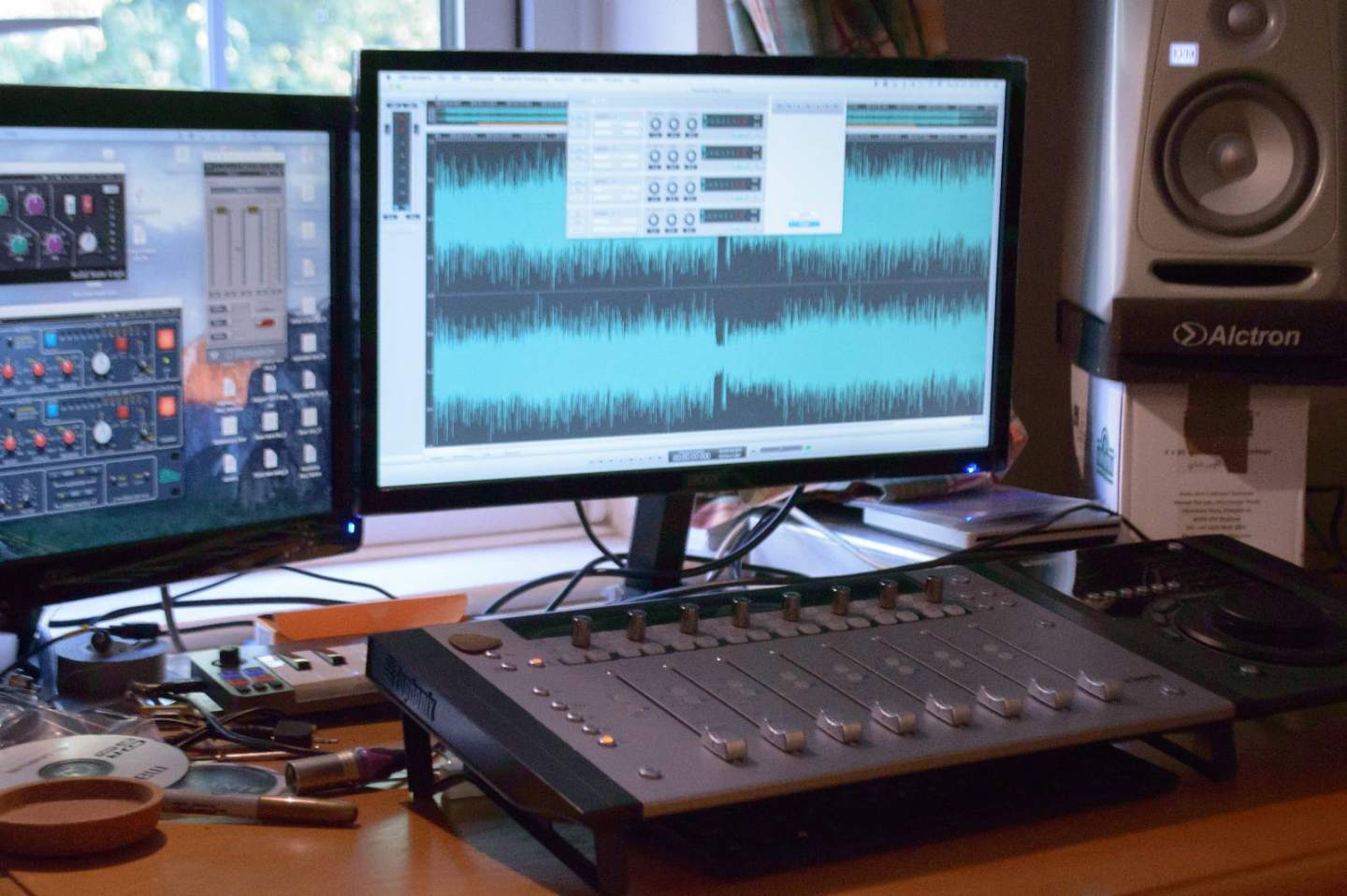
Audio restoration for recordings that need careful repair
Noise, clicks, hum, distortion and distracting background sound can make a valuable recording difficult to use. Restoration can reduce those problems and improve clarity without pretending the original source can be rebuilt from nothing.
I assess the recording, the problem you are hearing and the purpose of the finished audio before deciding how far the restoration should go.
Restore the recording without removing its character
A clean file is not always the same as a better file. Aggressive processing can strip away ambience, soften transients or make voices and instruments sound unnatural.
The aim is to reduce what distracts from the recording while retaining the detail and atmosphere that belong there. An archival performance, spoken-word recording and commercial music release may each need a different balance between cleanup and preservation.
Problems that can be assessed
- Steady hiss
- Electrical hum
- Clicks
- Crackle
- Short intrusive sounds
- Inconsistent level
- Background noise
Restoration can be used to address steady hiss, electrical hum, clicks, crackle, short intrusive sounds, inconsistent level, background noise and sections where speech or music has become harder to understand.
The result depends on how strongly the unwanted sound overlaps the material you want to keep. A noise that sits between phrases is usually a different problem from distortion embedded in the vocal itself.
Send a short description of the fault and, once agreed, a representative section of the audio. Rupert can then explain what appears practical before the complete project is transferred.
Music, spoken word and archive material
Restoration can support music releases, interviews, comedy, spoken word, live recordings and personal archive material.
Where the audio is intended for release, the restored source may also need editing, mastering or format preparation. Those stages should be scoped separately so the work remains clear.
No named restoration credit is used without permission. Client projects, archive material and personal recordings are treated as confidential, and examples are only shared once the owner has agreed.
Digital files and legacy sources
- Transfer
- Restoration
If the recording is already digital, supply the highest-quality source available. Do not convert it repeatedly before sending it.
If the material is held on cassette, DAT, vinyl or another supported physical format, begin with the Transfers page. The transfer should be completed carefully before restoration decisions are made.
Vigilante Studio does not copy commercial releases or other copyrighted material unless proof of ownership is provided.
What restoration cannot do
Restoration cannot recover information that was never captured. It cannot turn a distant phone recording into a close studio microphone, reverse severe clipping perfectly or remove a sound that completely masks the performance beneath it.
A good assessment explains the likely improvement and the trade-offs. When the source is too limited for a responsible promise, Rupert will say so.
How the project is quoted
Restoration is quoted after the source and required outcome are understood. The price depends on the duration, condition of the recording, type of problem, amount of detailed repair and final deliverables.
A short file with one isolated noise is different from a long archive that needs transfer, editing, track separation and repeated manual work.
Questions about audio restoration
Can every background sound be removed?
No. The result depends on how the unwanted sound overlaps the recording. Some problems can be reduced substantially, while others can only be improved without damaging the material you want to keep.
Should I edit the file before sending it?
Usually not. Send the best original source available and explain which sections matter. Repeated conversion or destructive editing can reduce the options for restoration.
Can a restored recording also be mastered?
Yes, where mastering is appropriate to the final use. Restoration and mastering are different stages and should be scoped separately.
Start with the best source you have
Tell Rupert what the recording contains, what is wrong with it and how the finished audio will be used.