
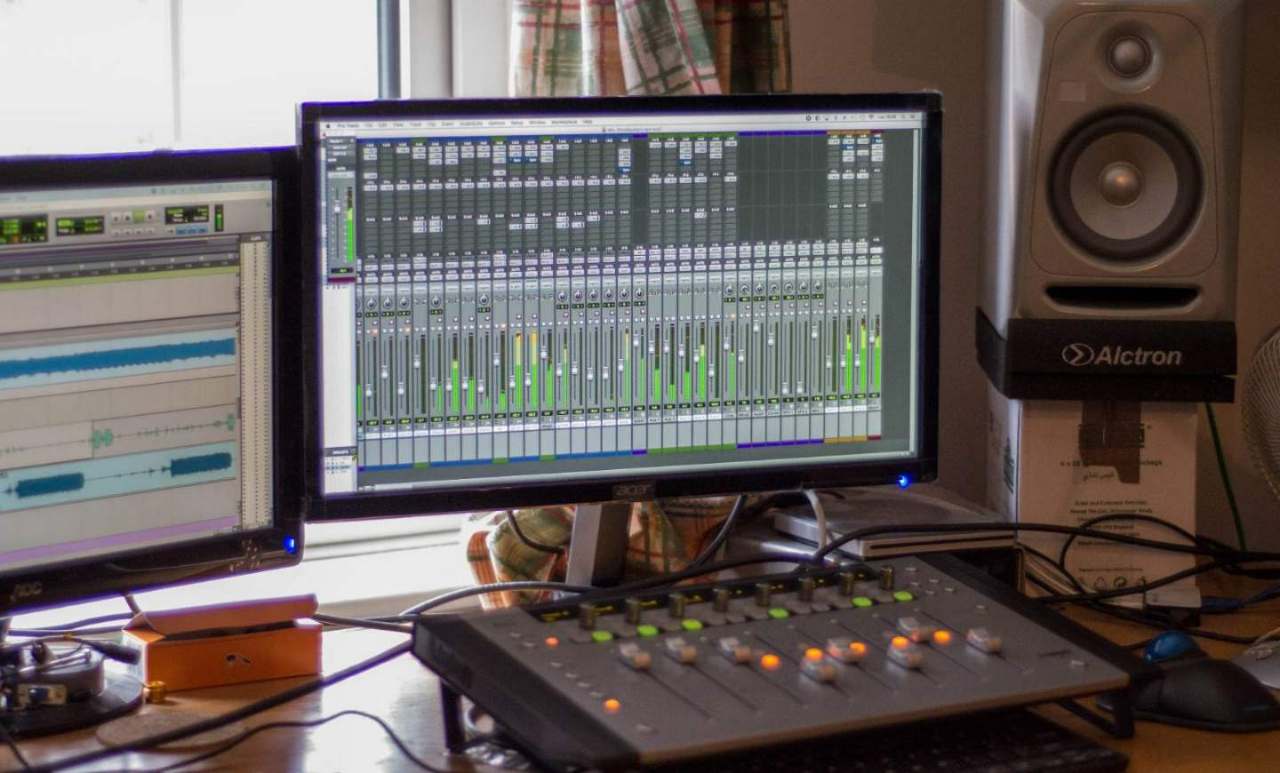
Mixing and mastering are separate stages because they work with different material and answer different questions.
Mixing works inside the session. It can change the vocal, kick, bass, guitars, effects, edits and automation independently. Mastering works from the approved stereo mix and prepares that complete result for release.
Understanding the difference helps you avoid paying for mastering when the track still needs a mix change, or continuing to remix when the remaining decisions belong to the final stereo file.
Contents
- Mixing builds the relationships inside the song
- Mastering works with the complete stereo mix
- Problems that usually belong in the mix
- Problems that may belong in mastering
- Why the same issue can appear at both stages
- Production comes before both
- How Dolby Atmos changes the question
- Useful questions before exporting the mix
- Preparing the final stereo mix
- Questions about mixing and mastering
Mixing builds the relationships inside the song
A mixer receives the individual recorded or programmed parts. The job is to decide how those parts relate to one another.
That includes level, panning, tone, dynamics, effects, depth and movement across the arrangement. The mixer can bring a vocal forward, reshape one drum, change the reverb in a chorus or automate a guitar between sections because the session keeps those elements separate.
Mixing is also where technical and creative decisions meet. Removing noise, editing performances and organising the production may be part of the route to the final mix, but the aim is still a musical balance rather than a technically tidy session for its own sake.
Mastering works with the complete stereo mix
Once the mix is approved, it is exported as one stereo file. The mastering engineer no longer has independent control over every element.
Mastering can adjust the complete tonal balance, dynamics and level. It can help the track translate, prepare release files and create a coherent relationship across an EP or album.
Because every sound is now joined together, a change made to help one area may also affect another. That is why mastering needs judgement rather than a promise to fix anything the mix has left behind.
Problems that usually belong in the mix
Return to the mix when a concern involves one element or one specific moment inside the arrangement.
A vocal that is too loud only in the chorus, a guitar that needs different effects, a kick that disappears under the bass, an edit that clicks or a backing vocal that needs tuning all require access to the session.
Mastering may influence how those elements are perceived, but it cannot reach into the stereo file and treat them as if they were still separate tracks.
If you can describe the change as “make this one thing different”, it probably belongs in the mix.
Problems that may belong in mastering
Mastering may be the right stage when the mix feels complete but the overall balance needs a final perspective.
The low end may feel slightly heavy across the whole track. The upper range may become tiring on different systems. The song may need a release-ready level without flattening the movement. Several approved mixes may need to sit together as one project.
The distinction is not always obvious. Send Rupert your concern in ordinary language. He can tell you whether the stereo file is the right place to address it.
Why the same issue can appear at both stages
Words such as brightness, punch and clarity can describe different problems.
A dull vocal may need a mix change if the rest of the track is already balanced. A whole mix that feels closed may be suitable for a broad mastering adjustment. Weak impact could come from the drum balance, the arrangement, excessive mix limiting or the relationship between sections.
The label matters less than identifying where the control still exists.
Production comes before both
- Production
- Mixing
- Mastering
Sometimes the problem is neither mixing nor mastering. The arrangement may be crowded, a performance may need another take or the song may not yet have a clear direction.
That is production work. It shapes the material before the mix settles the internal relationships and the master prepares the final release.
Vigilante Studio offers production and stereo mixing separately for projects that are not yet ready for online mastering.
How Dolby Atmos changes the question
- Multitracks or stems
- Atmos mix
- Atmos mastering
Dolby Atmos mixing is not stereo mastering carried into a larger format. It is a mixing process that needs the original multitracks or suitable stems so musical elements can be placed in an immersive field.
An approved stereo mix can act as a reference, but a stereo master alone is not the source for a true Atmos mix. Atmos mastering then follows the immersive mix as a separate final stage.
Useful questions before exporting the mix
Listen through the track and ask whether any single element still needs to change. Check the vocal relationship, low end, effects, edits, fades and the contrast between sections.
Then ask whether the song already feels like the record you intended. If it does, the remaining work may be about translation, level, sequence and delivery.
When you are uncertain, send a note with the mix. You do not need to solve the technical question before asking an engineer.
Preparing the final stereo mix
Export a WAV or AIFF file at the native sample rate and bit depth. Avoid clipping and do not create an MP3 mastering source.
Keep any processing that is part of the sound. Anything on the stereo mix is part of the finished mix. The only time it is likely to be questioned is if the mix has been over-limited, in which case Rupert may ask for a cleaner version.
Questions about mixing and mastering
Can mastering make the vocal louder?
A broad change may affect how the vocal is perceived, but mastering cannot independently move it without also influencing the rest of the stereo mix. A clear vocal-level problem usually belongs in the mix.
Should I send stems instead of a stereo mix?
No. Vigilante Studio does not offer stem mastering. Send the finished stereo mix for online mastering. Stems or multitracks are relevant to production, mixing or Dolby Atmos work.
Can Rupert mix and master the same project?
Yes, where the project is scoped for both stages. The mix should still be approved before mastering begins so the responsibilities remain clear.
Choose the stage that still has the control you need
If the session still needs work, discuss production and mixing. If the stereo mix is approved, prepare it for mastering.
What audio mastering does for a finished mix
A practical explanation of the mastering stage, what can change after the mix and which problems still belong in the session.
Mastering loudness for a music release
Why streaming normalisation does not create one correct loudness target, and why level should remain part of a wider musical decision.
Preparing a music release in Dolby Atmos
What source material, release planning and distributor conversations need to happen before an immersive project begins.